
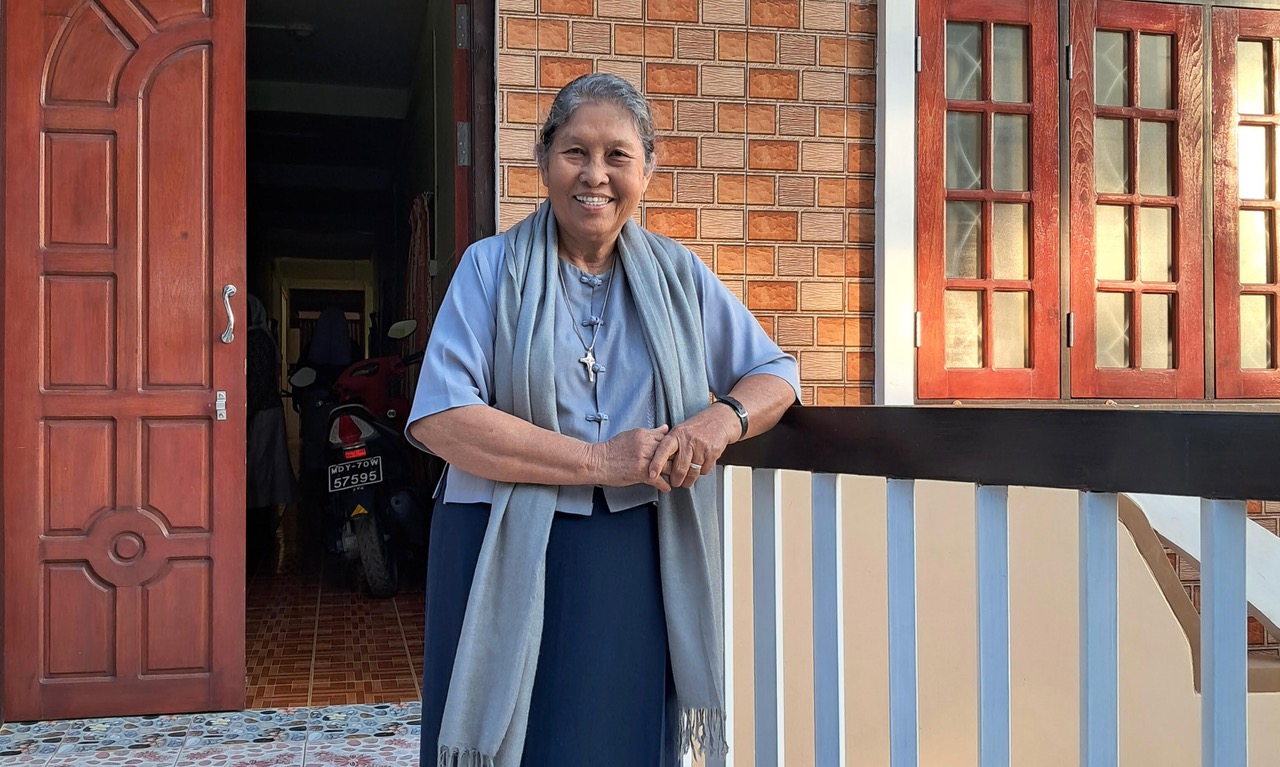
Sister Martha: “I have to do what I am doing”
Mit diesem Beitrag setzen wir unsere Reihe fort, in der wir Menschen vorstellen, die die Arbeit der Myanmar Stiftung vor Ort tragen und prägen. Ihre Geschichten geben Einblick in das, was oft im Hintergrund geschieht – und in die Haltung, aus der heraus diese Arbeit entsteht. Sister Martha ist eine dieser Persönlichkeiten. Seit vielen Jahrzehnten engagiert sie sich für Kinder und Familien in besonders herausfordernden Lebenssituationen – getragen von einer inneren Klarheit, die ihr Handeln bis heute bestimmt.
Sie selbst schreibt:
My name is Sister Martha, know as Daw Mya Thway. I was born in Maygon Village, a catholic village located close to Shwebo, Sagain Division, as the third of four siblings. Attending church services, being honest and sharing what we have with others and assisting them was what my family taught me. My family education and attending school in St. Joseph’s Convent in Mandalay, influenced what course of live I should take. I decided to choose a religious life and entered the St. Joseph’s Novitiate in 1970 and took my vows in 1972. Besides serving my religious duties, I also pursued higher education attending Yangon University via distant learning and earned a Bachelor of Arts in Law. Since 1974, I am serving various missions across Myanmar and was also working for Radio Veritas Asia in Manila for a couple of years and also spent some time in the UK for my parish.
Returning to Kyaikkhami, Myanmar, I witnessed the devastating impact of HIV/AIDS epidemic while caring for Karen displaced children. I expanded my reach to Kawthaung and Ranong (Thailand). When I witnessed the immense suffering, discrimination, and life of HIV infected and helplessness of the people, I was forced to get involved. I became fearless and wanted to do anything in my power to assist these people. Once a donor asked me to describe in a short sentence why I do what I do and my immediate answer was “I do because I have to do what I am doing”.
I am now focusing my work on health, education, and vocational training of migrant workers children, including income generation for families, combating human trafficking, and rescuing and supporting street children.
